

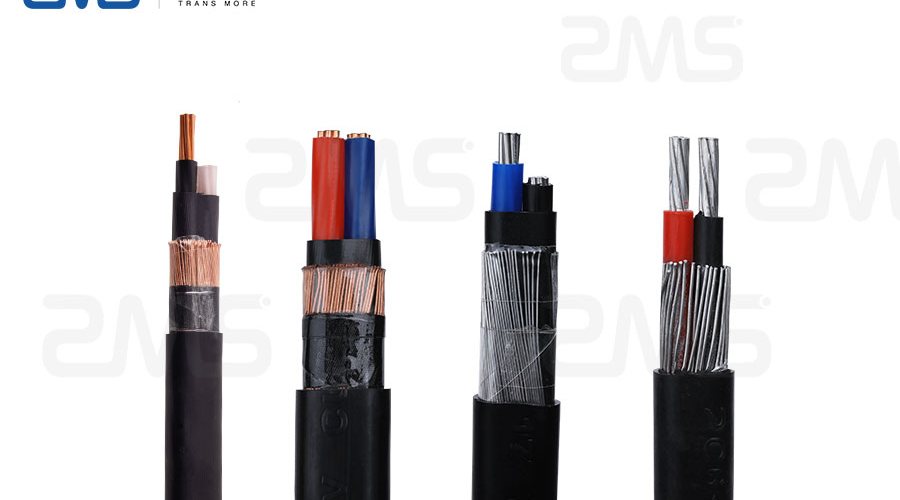
An unshielded control cable is the right choice in many installations. A shielded cable is the right choice in others. The difference is not a premium feature; it is an engineering decision based on the interference environment and the consequence of a bad signal.
When unshielded cable is enough
Unshielded multi-core cable works well for relay logic, contactor control, indication and interlocking where the circuit is short, the current is relatively high and the cable is not routed beside drives or switching equipment. It is easier to terminate, more flexible and usually more economical.
When a screen earns its place
Add a screen when a low-level signal shares an enclosure or a tray with variable-speed drives, servo systems, welding equipment or high-current switching. Add it when the cable runs parallel to power conductors for a long distance. Add it when a signal is used for measurement rather than indication, or when a false reading has a real process consequence.
Braid or foil?
Copper braid is mechanically robust and performs well across a wide frequency range. It is the usual choice for drive and servo environments. Aluminium/polyester foil with a drain wire is lighter and less expensive, and is effective for static screening. Foil is more vulnerable to damage at termination, so the drain wire and the earth connection need care.
Termination is part of the screen
A screen that is not terminated properly is not a screen. The earth connection should be low impedance, the screen should be continuous through glands and connectors, and the drain wire should be bonded at the intended point. The correct earthing strategy depends on the circuit and the installation; it should be confirmed by the project engineer.
ZMS supplies both constructions in PVC and LSZH, with optional armour. Send us the application and we will help you compare the options.
The screen decision maps to two families. Where a screen is not needed, the general multi-core control cable is the economic answer; where it is, choose between the copper braided shielded cable for mechanical robustness and the LSZH shielded control cable where the space also demands a halogen-free sheath.